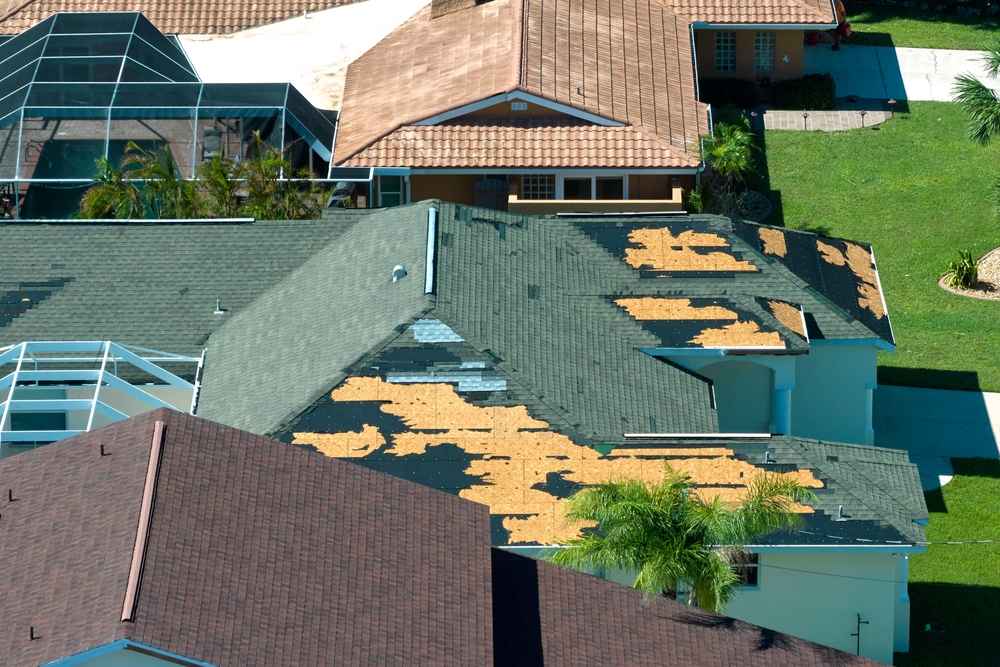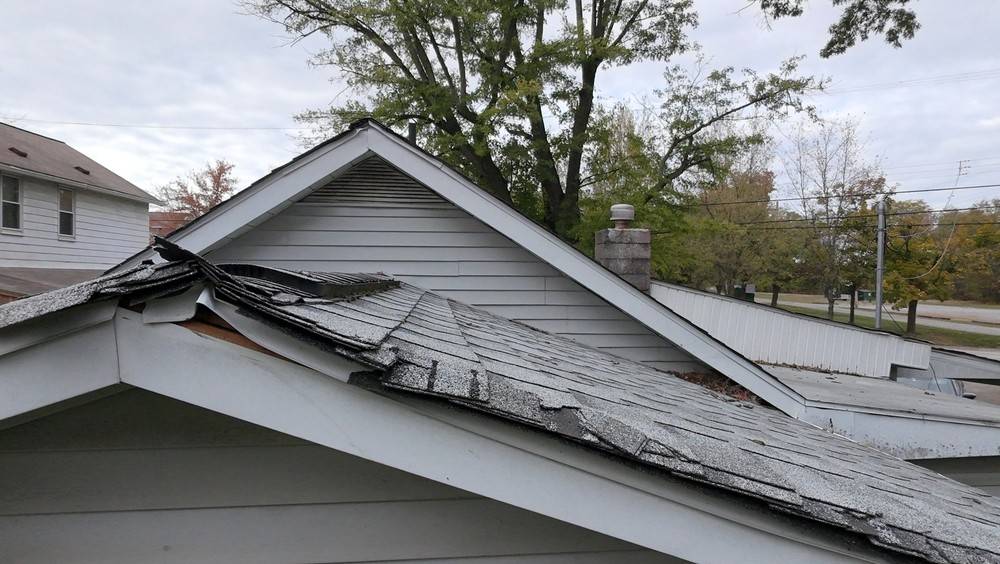
Ohio homeowners filed more storm damage roof claims in 2023 and 2024 than in any comparable stretch of the previous decade. Carriers responded the way they always do to rising losses. They raised premiums 10.9 percent in Ohio in 2024 alone, according to S&P Global data. They tightened documentation requirements and began shifting older roofs from full replacement cost coverage to depreciated-value settlements.
That shift changes what you need to do after a Northern Ohio storm. The old approach was simple: call your insurer, wait for the adjuster, and accept the offer. That approach now leaves money on the table for many homeowners. This guide walks through every step in the right order, with the Ohio-specific rules and current carrier behaviors that determine what you are actually owed.

What Ohio Homeowners Insurance Covers After a Storm
A standard Ohio homeowners policy covers sudden, accidental damage from named perils. The three most common triggers for roof claims in Northern Ohio are hail, high-wind events, and fallen tree limbs. Ice dams, which form when attic heat melts rooftop snow and water backs up under shingles, are also covered when they cause interior water intrusion.
Your policy does not cover normal aging, wear and tear, or maintenance failures. A carrier that suspects pre-existing deterioration will investigate the claim closely. If your roof showed lifted tabs, granule loss, or rotted decking before the storm, expect the adjuster to note those conditions in the scope of loss.
Two exclusions that surprise homeowners most often: ground-level flooding requires a separate flood policy, and purely cosmetic damage with no functional loss may not meet the coverage threshold under newer policy language.
Before you call anyone, pull out your declarations page and confirm three things.
- Your deductible amount. Many Ohio carriers now carry wind-and-hail-specific deductibles of $1,500 to $2,500 or more, separate from your standard all-perils deductible.
- Whether your policy settles on an Actual Cash Value (ACV) or Replacement Cost Value (RCV) basis.
- Your filing deadline. Ohio policies commonly require claims within one year of the date of loss, though some allow two. Check your specific policy language.
ACV vs. RCV: The Coverage Type That Determines Your Payout
Understanding these two terms before you file protects you from accepting far less than you are owed.
Replacement Cost Value (RCV) pays the full cost to repair or replace your roof with like-kind materials, minus your deductible. On an RCV policy, your insurer issues two payments. The first check covers the Actual Cash Value, meaning what the roof is worth today after factoring in age and depreciation. After the work is completed and your contractor submits documentation, the insurer releases a second payment for the withheld “recoverable depreciation.” That second check closes the gap between what the roof was worth and what it costs to replace it.
Actual Cash Value (ACV) pays only the depreciated value. A 16-year-old asphalt roof with a $15,000 replacement cost might receive an ACV settlement of $4,000 to $6,000 after depreciation. The remainder comes out of your pocket regardless of the storm’s severity.
Ohio carriers have been shifting older roofs to ACV coverage at renewal. Many now apply depreciation schedules to any asphalt roof over 15 years old, regardless of its maintained condition. If your policy renewed in the last two years, read the roof endorsement section specifically. This change often appears as a quiet endorsement attached to the renewal documents.
Step 1: Document the Damage Before You Call Anyone
Your first move after a storm is to document, not call. A dated, comprehensive record of the damage is one of your most important assets if the claim is ever disputed.
Photograph the exterior from the ground using a smartphone with geotagging turned on. Capture the full roof surface, damaged gutters, dented metal trim, any soffit or fascia displacement, and debris on or around the structure. Move inside and photograph any ceiling water stains, wall discoloration, or attic moisture. Note the exact date and time. Save a screenshot of local weather radar or a National Weather Service storm report from that day, because your carrier will verify the event.
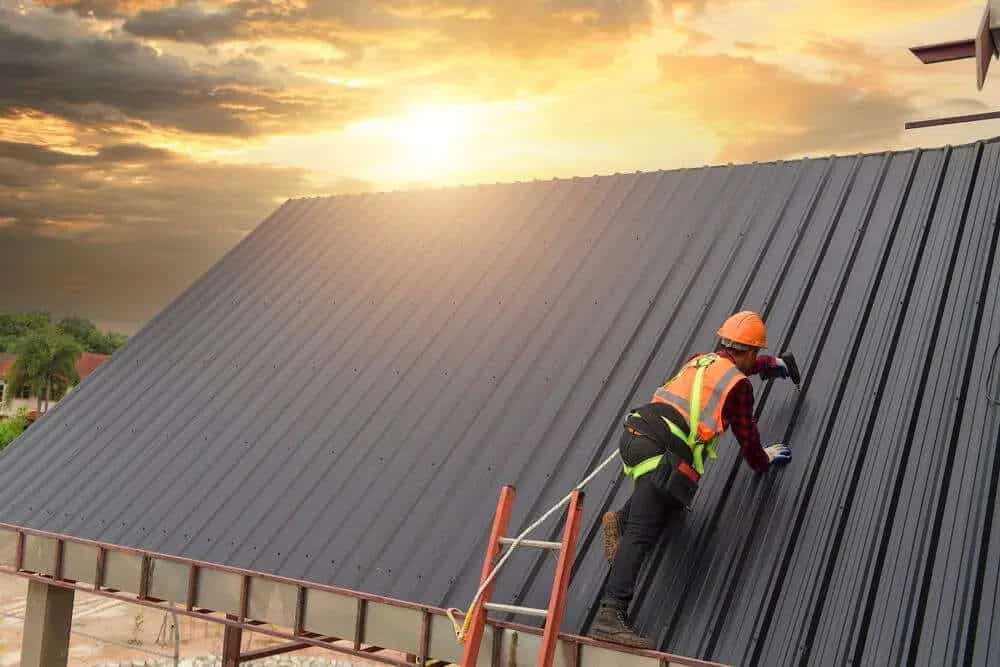
Do not climb the roof yourself. Hail-damaged shingles become brittle and slippery, and a fall turns a manageable insurance claim into a serious injury.
Do not make permanent repairs before the adjuster inspects your roof. Permanent repairs completed before inspection can give a carrier grounds to dispute the scope of damage. Temporary protective measures like tarps are acceptable and will not jeopardize your claim.
Step 2: Get a Professional Roof Inspection Before Filing
This is the step most Ohio homeowners skip, and it is the one that costs them the most.
Contact a licensed local roofing contractor for a professional inspection before you call your insurer. A trained eye can identify damage that does not show from the ground: fractured shingle tabs, compromised underlayment, damaged flashing, bruised granule fields on asphalt, and dented metal components that map the hail size and impact pattern across the roof plane.
That written inspection report establishes a baseline scope of damage before any adjuster arrives. Adjusters are knowledgeable, but they carry heavy caseloads, especially in the weeks after a regional storm event. Items missed in the initial adjuster scope become the subject of a supplemental claim later, which adds weeks to your timeline. A thorough professional assessment at the start is a cleaner, faster path to a full settlement.
Hershberger Brothers Roofing offers free storm damage roof inspections across Northern Ohio. Call (330) 641-2552 to schedule yours before opening a claim.
Step 3: File the Claim With Your Insurer
Once you have your damage documentation and your contractor’s inspection report, contact your insurance carrier to open the claim. Most carriers now provide online claim portals and dedicated storm damage phone lines. Have the following ready before the call.
- Your policy number and declarations page.
- The exact date and time of the storm event.
- Your inspection report and all photographs.
- A written description of the damage and the affected areas.
Your carrier will assign a claims adjuster and schedule a site visit, typically within one to two weeks of filing. Record the adjuster’s name, direct phone number, and email address the moment you receive that assignment. Document every conversation after that: date, time, who said what, and any commitments the carrier makes.
Most Ohio policies require the initial claim report within a specific window after the date of loss. Filing late can result in denial on notice grounds alone, even when the damage is fully covered. Do not delay.
Step 4: Have Your Contractor Present at the Adjuster Inspection
Request that your roofing contractor attend the adjuster’s site visit. On larger or disputed claims, this is standard practice. Most reputable Ohio contractors attend at no additional charge.
The value is specific and practical. Adjusters work from overhead imagery, condition notes, and a structured scope template. A contractor can walk the adjuster directly to hail spatter patterns, point out wind-lifted starter strips that are invisible from a standing position, and identify code-upgrade line items that belong in the estimate.
Code upgrades are often the largest source of underpayment in Ohio storm claims. The 2023 Ohio Building Code, which governs repairs requiring tear-off, may require updated drip edge, ice-and-water shield in the first three feet from the eave, and specific underlayment specifications. Those items cost several hundred dollars each and disappear entirely from many initial adjuster scopes.
When the adjuster finishes the inspection, ask for a copy of the scope of loss document before anyone leaves. Compare it item by item against your contractor’s written report. Any line items on your contractor’s report that are missing from the adjuster’s scope are candidates for a supplemental claim.
Step 5: Review the Settlement Offer Before You Accept
Your carrier will issue a settlement offer based on the adjuster’s scope. Do not accept or sign anything until your contractor has reviewed it in full.
Look for these specific gaps.
- Code upgrade line items that are missing or set to zero.
- Depreciation applied to components that are not age-sensitive, such as flashing or ridge cap.
- Labor rates below current Northern Ohio market rates.
- A repair scope on a roof where 25 to 30 percent or more of the total surface is damaged, which most carrier guidelines treat as a replacement threshold rather than a repair situation.
If the offer is lower than your contractor’s estimate, your roofer can submit a supplemental claim. A supplement is a written counter-scope with line-item documentation and supporting photographs. Supplemental claims are the most common mechanism for correcting underpaid storm damage settlements in Ohio, and most are resolved without litigation or formal complaint.
On an RCV policy, remember that your first check represents only the ACV portion. Do not spend it until the work is scheduled. The second check, covering recoverable depreciation, arrives after your contractor submits a completion certificate or paid invoice to the carrier.
What to Do If Your Claim Is Denied or the Offer Is Too Low
A denial is not necessarily final. Ohio homeowners have the right to request re-inspection and to formally dispute coverage decisions.
For a denial appeal, collect three things: your contractor’s full written inspection report, time-stamped photographs, and dated local weather data confirming the storm event. Submit these to your carrier in writing, and ask for the specific reason for the denial in writing as well. That stated reason determines the most effective response.
If the carrier attributes the damage to pre-existing wear rather than storm impact, your contractor’s documentation of the hail impact pattern is the counter-evidence. Hail leaves consistent, identifiable signatures: uniform bruising on directional exposures, circular dents on gutters and downspouts correlated in size and density to the storm’s hail diameter, and granule displacement concentrated on storm-facing surfaces. A written report that maps these indicators is a stronger dispute tool than any verbal account.
If the carrier’s internal dispute process does not resolve the disagreement, Ohio homeowners can file a complaint with the Ohio Department of Insurance at insurance.ohio.gov. A public adjuster, an independent claims specialist who works on a percentage of the settlement, is another option when the disputed amount justifies the cost.
The Ohio Matching Rule: Your Insurer Cannot Leave You a Checkerboard Roof
Ohio insurance regulations prohibit carriers from leaving homeowners with a visibly mismatched roof. Under a replacement cost policy, your insurer must replace enough of the roof surface to achieve a “reasonably comparable appearance.” Patching three damaged sections with shingles from a different production run does not meet that standard when matching materials cannot be sourced.
This matters most on mid-grade asphalt roofs where manufacturer production runs change year to year. A shingle installed in 2019 often no longer matches current production in either color or texture. If your contractor determines that like-kind materials are unavailable, document that finding in writing. Include it in your supplement or dispute letter, and reference the matching standard directly.
Ohio courts and the Ohio Department of Insurance have sided with homeowners on matching claims. Carriers still resist, but the regulatory framework supports a full replacement when a partial repair would result in an appearance that does not match the undamaged portion of the roof.
Avoid Storm Chasers: What They Cost Ohio Homeowners
Every significant Northern Ohio storm draws out-of-state roofing crews within 24 to 48 hours. They knock doors, promise that the roof will be “free” through insurance, and ask homeowners to sign paperwork immediately.
The most dangerous document they carry is an Assignment of Benefits (AOB) form. Signing an AOB transfers your claim rights to the contractor before you understand the settlement. You lose direct control of the process, the carrier communicates with the contractor instead of you, and the funds follow accordingly. Ohio homeowners who have signed AOB forms with out-of-state crews have faced delayed repairs, substandard materials, and contractors who leave the state before warranty issues surface.
Two additional practices to reject outright: any contractor who offers to waive your deductible is describing something that can constitute insurance fraud under Ohio law and can jeopardize your entire claim, and any contractor who asks you to sign a direction-to-pay form before the carrier approves a scope has reversed the order of operations in a way that benefits them, not you.
Choose a contractor with a verifiable Ohio address, active licenses, and a documented record of completed local work. Hershberger Brothers Roofing has served Northern Ohio since 2017, with a 4.9-star Google rating based on verified reviews from homeowners in Wooster, Akron, Mansfield, Canton, and the surrounding communities.
Common Questions About Storm Damage Roof Insurance Claims in Ohio
How long do I have to file a storm damage claim in Ohio?
Most Ohio homeowners policies require a claim report within one year of the date of loss. Some policies allow two years. Read your declarations page for the exact notice requirement. Filing late is one of the most common grounds for outright denial, even on a covered loss.
Should I call my insurance company or a roofer first?
Call a roofer first. A professional inspection gives you a documented scope of damage before the adjuster arrives. That document becomes your baseline for reviewing the adjuster’s estimate and identifying any items that need to be supplemented.
What is a supplemental claim and when should I file one?
A supplemental claim is an additional scope submission to your carrier covering damage items or code upgrade requirements that the initial adjuster missed. Your contractor prepares it with photographs and line-item detail. Supplemental claims are the standard mechanism for correcting underpaid initial settlements and are routinely approved by Ohio carriers without litigation.
Will filing a storm damage claim raise my premiums?
Filing a legitimate claim for a covered weather event may affect your renewal rate, but Ohio law prohibits carriers from canceling your policy solely because you filed a storm damage claim. Contact your agent to understand your specific policy terms before making a decision.
Schedule a Free Storm Damage Inspection in Northern Ohio
Storm damage claims in Ohio are more complicated than they were five years ago. Carriers apply depreciation to newer roofs, insert wind-and-hail-specific deductibles at renewal, and scrutinize roof age more carefully when writing initial scopes. Getting the full settlement you are owed requires current documentation, code knowledge, and someone who understands how Ohio carriers calculate and respond to these claims.
Hershberger Brothers Roofing provides free post-storm inspections with a written damage report suitable for carrier submission. The team attends adjuster inspections, reviews settlement scopes against the documented damage, and files supplemental claims when the initial offer falls short. None of that support carries an additional charge.
If your roof has sustained storm damage, schedule a professional inspection before you open a claim. Reach Hershberger Brothers Roofing at (330) 641-2552 or complete the free inspection request form online.
If the inspection confirms that the damage warrants a full tear-off, learn about the roof replacement process or explore residential roof repair options for more localized damage.