Most comparisons of these two materials line up cost, lifespan, and appearance, then tell you metal wins if you can afford it.
That is not the comparison that matters in Ohio in 2026. Two things decide this now, and neither one appears in the usual list. The first is the exact language in your homeowners policy. The second is the gauge of the panel.
Get those two right and either material will serve you well. Get them wrong and you can spend more on a metal roof and end up with less protection than the asphalt roof you replaced.
Here is the honest version.
The Short Answer
Choose asphalt when the budget is the constraint, when the roof has many valleys, dormers, and penetrations, when you may sell within a decade, or when your policy carries a cosmetic damage exclusion and the appearance of your roof matters to you.
Choose metal when you intend to stop re-roofing this house, when the roof planes are relatively simple, and when you will specify it properly rather than buying the cheapest panel available.
Neither is universally better. In our experience the tiebreaker is usually the insurance policy, and almost nobody checks it before choosing.
The Insurance Problem Nobody Mentions
This is the section that will save some readers real money, and it is the one metal roofing salespeople skip.
Cosmetic Damage Exclusions Apply Mostly to Metal
A cosmetic damage exclusion is an endorsement that removes coverage for dents, dings, pitting, and discoloration that mar appearance without impairing the roof’s ability to protect the house. It applies even when the cause was a covered peril such as hail.
These exclusions are a growing feature of the Ohio residential market, and the American Adjuster Association notes that they usually apply to metal roofs, along with siding, windows, and other exterior components. They are also frequently buried deep in the policy, and homeowners take the associated premium discount without understanding what they gave up.
Now here is the inversion that catches people.
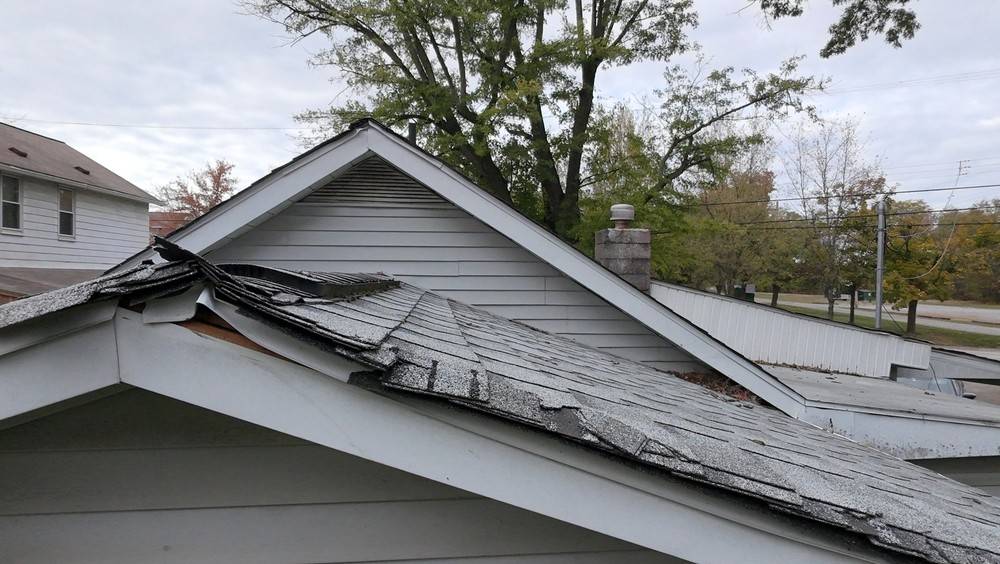
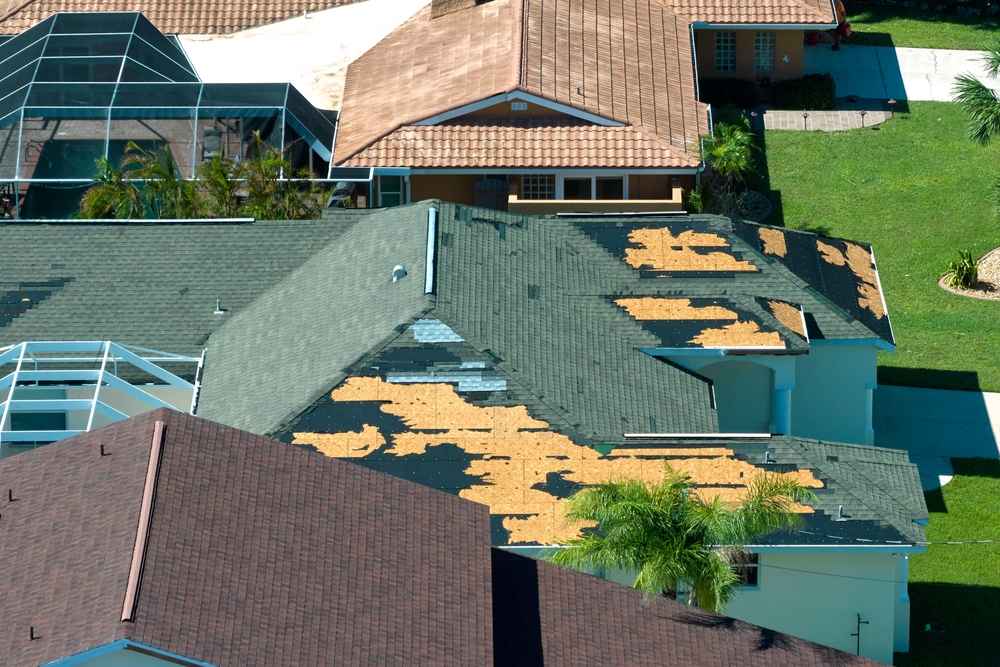
When hail hits an asphalt roof, the damage is typically functional. Granules are knocked loose, the mat gets exposed, seals break. That is damage to the roof’s performance, and it is generally covered.
When hail hits a metal roof, the damage is typically dents. The panel keeps shedding water perfectly. That is cosmetic, and under an exclusion it may not be covered at all.
So a homeowner can choose metal specifically because it resists hail, then discover that the hail marks on their new roof are their own problem. Worse, a policy carrying this exclusion is still often labeled replacement cost value coverage, so the RCV designation on your declarations page does not tell you whether you are protected.
What to do: before you choose a material, ask your agent in writing whether your policy contains a cosmetic damage exclusion, and whether it applies to roofing. Get the answer in an email, not a phone call. Then choose.
The 2026 Roof-Age Rules Have Changed
Separate from the exclusion question, coverage on older roofs tightened this year.
Many Ohio carriers now shift roofs past roughly 15 years to actual cash value rather than replacement cost, meaning you receive the depreciated value rather than the cost to replace. Some apply a payment schedule that reduces the covered percentage as the roof ages. Some will not write a new policy at all on a home with a roof past 15 to 20 years without a passing inspection first. Older three-tab roofs in particular are being flagged for limited or functional replacement only.
Premiums are moving too. Real estate analytics firm Cotality projects homeowners insurance premiums rising roughly 8 percent in 2026 and another 8 percent in 2027.
The practical implication cuts both ways. If your roof is already past a decade, do not assume your coverage works the way it did when you bought the policy. And whichever material you install now, the depreciation clock starts on installation day.
Class 4 Is Available in Both Materials
Impact resistance is rated under UL 2218. A Class 4 product has withstood two-inch steel ball impacts without cracking or puncturing, including two hits on the same spot. It is the highest rating available.
Class 4 exists in both categories. Impact-resistant asphalt shingles earn it, and so do many metal systems. Carriers commonly offer premium discounts in the range of 10 to 25 percent for Class 4 roofing.
Ask your carrier what discount they actually give in Ohio, in dollars, before you pay the upcharge for a Class 4 product. Sometimes it pays for itself in a few years. Sometimes it does not.
If You Choose Metal, Two Specs Decide Everything
Gauge: 24 Versus 29
Metal panel thickness is measured in gauge, and lower numbers mean thicker steel. A 24-gauge panel is substantially more dent-resistant than a 29-gauge panel. For hail-exposed parts of Ohio, 24-gauge or heavier is the sensible standard.
This matters directly because of the section above. If your policy excludes cosmetic damage, the dent resistance of the panel is no longer an insurance question. It is entirely on you, and gauge is the specification that determines it.
A 29-gauge ag panel is a legitimate product with legitimate uses. It is not what you want on the visible front slope of a house you plan to keep for thirty years in a hail corridor.
Ask for the gauge in writing. If a quote just says “metal roof,” it is not a quote yet.
Standing Seam Versus Exposed Fastener
This is the distinction that determines whether the fifty-year claims apply to your roof.
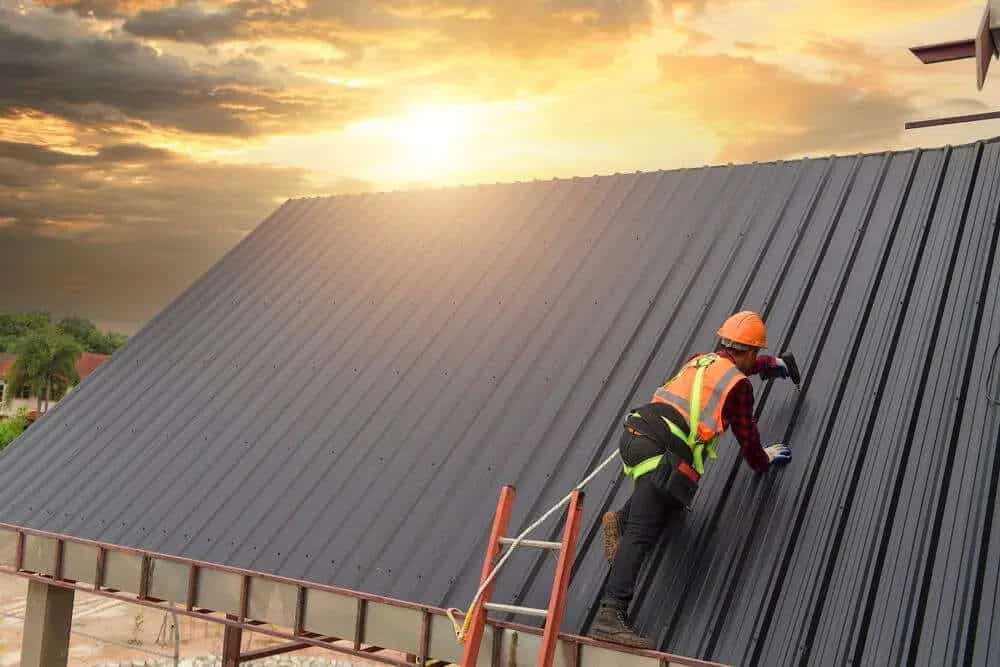
Standing seam panels attach with concealed clips. Nothing penetrates the panel face. Thermal movement is accommodated by design. This is the system behind long-life metal roofing claims.
Exposed fastener panels, sometimes called ag panel or R-panel, attach with screws driven through the face, each sealed by a rubber washer. Those washers degrade under UV and thermal cycling, and screws can back out over years of expansion and contraction. Expect a re-screwing and gasket service somewhere in the fifteen to twenty-five year window.
That is not a defect. It is a maintenance schedule. Exposed fastener metal is a good value if you plan for that service. It becomes a disappointment when someone sold it to you as a fifty-year no-maintenance roof.
We install both, and which one belongs on your house depends on the building, the budget, and how long you plan to own it. Our metal roofing page covers the systems we carry.
If You Choose Asphalt, Two Specs Decide Everything
Architectural, Not Three-Tab
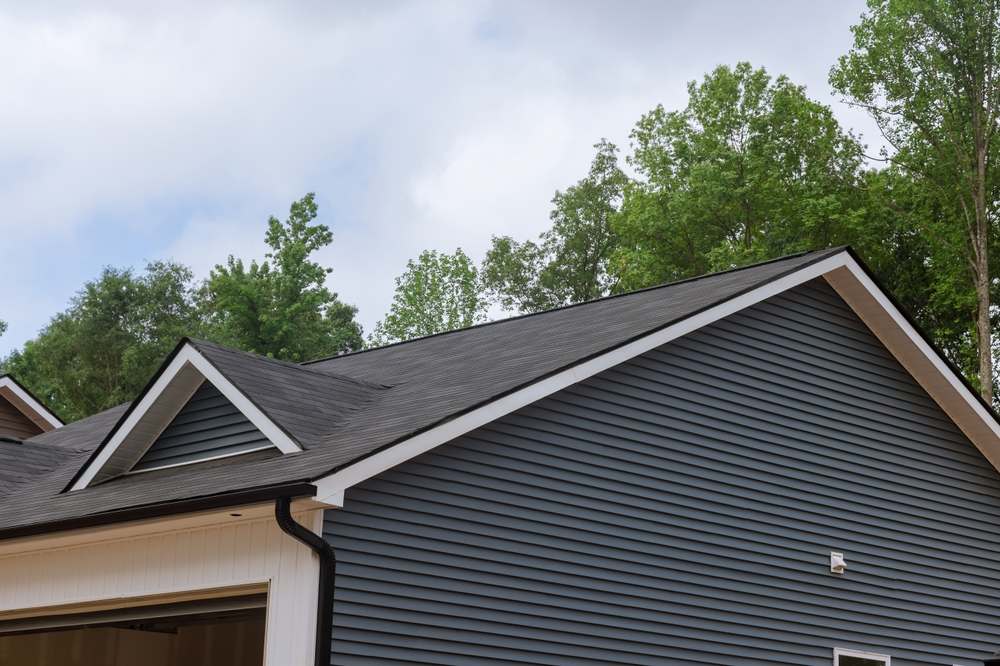
Architectural, sometimes called dimensional or laminate, shingles are heavier, wind-rated higher, and last meaningfully longer than three-tab.
They are also the pragmatic choice now that carriers are flagging aging three-tab roofs for reduced coverage. Installing three-tab today on a house you intend to keep is saving a small amount up front against a coverage problem later.
The Underlayment and the Ice Barrier
Here is where Ohio roofs actually fail, and where cheap bids quietly cut.
Model residential code requires an ice barrier at the eaves in areas with a history of ice forming along eaves and causing water backup. Northern Ohio qualifies without argument. That barrier is a self-adhering membrane running from the eave up the slope, and how far up it runs is a real specification, not a formality.
Four more details belong in the quote regardless of material:
- Synthetic underlayment across the field rather than felt
- Ice and water shield in the valleys and around every penetration, not only at the eaves
- A proper starter strip at the eaves and rakes, not cut-up field shingles
- Balanced ventilation, meaning intake at the soffit and exhaust at the ridge, in a matched ratio
That last one deserves emphasis. A ridge vent with no soffit intake does very little, and inadequate ventilation shortens the life of asphalt shingles from underneath while feeding ice dams from above. If your soffit is blocked with insulation or painted shut, that is part of the roofing job.
Our asphalt roofing page lists the shingle lines we install.
What Ohio Weather Actually Does to Each
Freeze and thaw. Asphalt grows brittle with age, and repeated cycling accelerates granule loss and cracking. Metal expands and contracts, which is why the fastening system matters more than the metal itself.
Ice damming. Both materials need the eave barrier. Metal sheds better once the sun hits it, but ice still forms at the eave where the roof is cold, and a metal roof over an under-ventilated attic will still dam.
Snow shedding. This one surprises people. Metal releases accumulated snow in sheets rather than melting it away gradually. Over an entry door, a walkway, a driveway, or an outdoor AC unit, that is a hazard. Snow guards are a real line item on a metal roof in northern Ohio, and a quote that omits them on a house with a front entry under a slope is incomplete.
Hail. Functional damage on asphalt, cosmetic denting on metal, which routes straight back to your policy language.
Wind. Both perform well when installed to specification. On asphalt the common failure is nailing, either too high, too few, or overdriven. Nail placement is invisible once the next course goes on, which is exactly why it gets rushed.
Cost in 2026, and Why the Gap Widened
Metal has always carried an upfront premium over asphalt. That premium grew in the last two years, and the reason is trade policy rather than roofing.
Section 232 tariffs on steel and aluminum sit at 50 percent, and the framework was adjusted again by proclamation effective June 8, 2026, running through the end of 2027, with tiered rates now applying to the full customs value of covered articles rather than the metal content alone. Aluminum has run roughly 10 percent higher year over year with tariff effects layered in.
Asphalt is not immune, since shingles are a petroleum product with their own input exposure. But the metal side moved more.
The practical takeaway is narrow and useful: do not compare a metal quote you received in 2023 to an asphalt quote you receive today. Price both materials fresh, in the same month, from the same contractor, on the same scope.
What Your Quote Should Specify
Compare bids on this list rather than the bottom number. Three honest quotes on identical scope should land close together.
- Material by name and line, plus gauge for metal or shingle series for asphalt
- Fastener system for metal, stated as standing seam with concealed clips or exposed fastener
- Underlayment type across the field
- Ice barrier at the eaves, with the coverage distance stated
- Ice and water shield in valleys and at all penetrations
- Flashing material and gauge, including step flashing at walls and chimney work
- Intake and exhaust ventilation, with the ratio
- Snow retention on metal, where slopes discharge over entries, walks, drives, or equipment
- Tear-off to the deck versus layover, and deck replacement contingency if rot is found
- Gutter and drip edge scope, since a new roof frequently needs new gutters
- Warranty stated in two parts: manufacturer material coverage and contractor workmanship coverage, each with a term in years
- Who pulls the permit and whose license it is filed under
If a bid is dramatically cheaper than the others, find which of these lines is missing before you assume you found a bargain.
Frequently Asked Questions
Is a Metal Roof Loud in the Rain?
Not over a solid deck with underlayment, which is how residential metal is installed. The noise reputation comes from metal over open purlins on barns and sheds, where there is no deck and no attic between you and the panel.
Can Metal Be Installed Over Existing Shingles?
Sometimes, and it is not automatically a good idea. It hides deck condition, complicates ventilation, and can void some warranties. On a roof of unknown history we would rather tear off and see the deck. If a contractor proposes a layover, ask what happens if there is rot underneath.
Does a Metal Roof Attract Lightning?
No. Metal is conductive, not attractive to lightning, and a metal roof is non-combustible, which is a modest advantage if lightning does strike nearby.
Which Material Helps Resale More?
It depends on the neighborhood and the buyer. In much of our service area a well-installed standing seam roof reads as a genuine asset, because buyers know they will not be re-roofing. In neighborhoods where every house has architectural shingles, a metal roof is a style choice rather than a premium. Either way, a documented recent roof with transferable warranty paperwork helps at closing.
Start With an Inspection and a Policy Check
Two homework items before you choose a material.
Email your insurance agent and ask, in writing, whether your policy contains a cosmetic damage exclusion and how it treats roofing. Then have someone get on the roof and tell you what the deck, ventilation, and flashing actually look like, because those determine half the cost of either option.
Hershberger Brothers Roofing installs both asphalt and metal across Wooster and northern Ohio, and we quote both when a homeowner is deciding. If asphalt is the better answer for your house and your policy, that is what we will tell you.
Book a free inspection, or call us today. We provide free written estimates, and financing is available if the metal upgrade is worth it on your house.