Metal roof over shingles no strapping has stirred quite the conversation among homeowners in regions like Wooster and Massillon, Ohio. Is it viable? Here’s what you need to know in a nutshell:
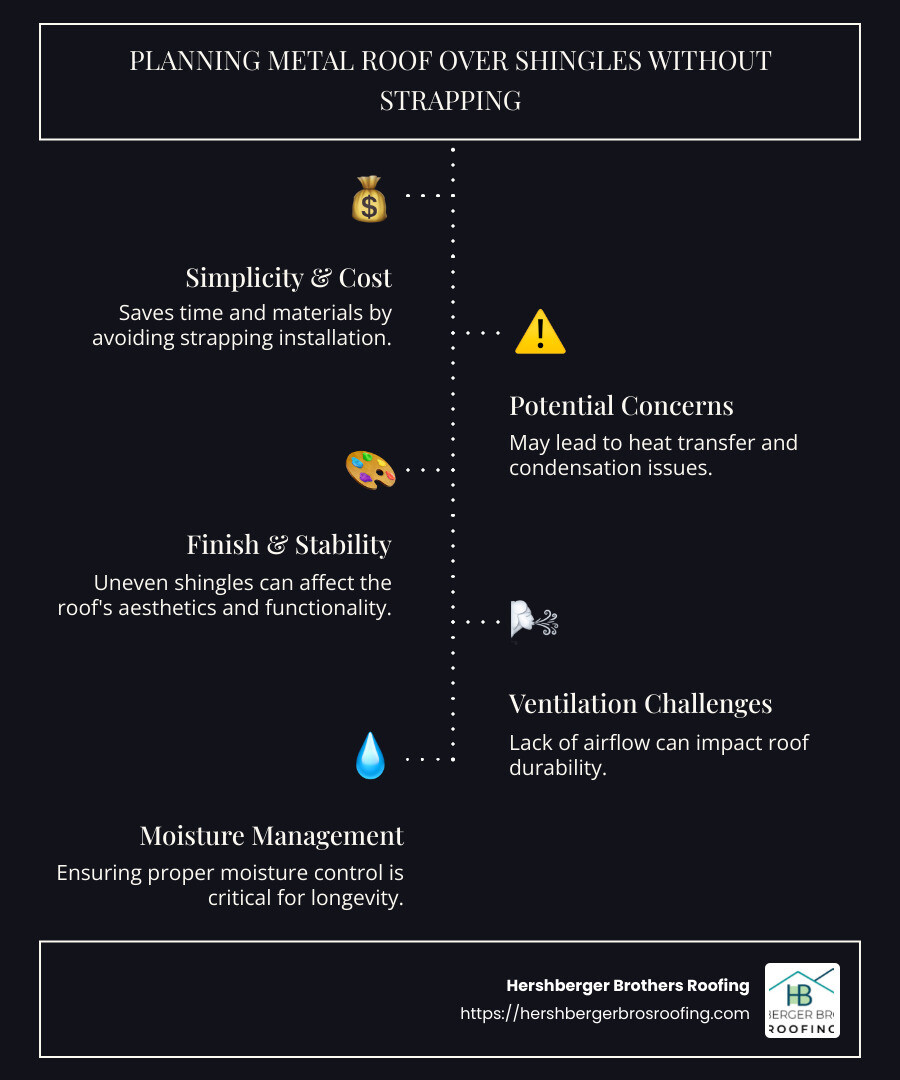
- Simplicity and Cost: Attaching a metal roof directly over shingles saves time and material costs.
- Potential Concerns: Lack of a ventilation gap could lead to heat transfer issues and condensation problems.
- Finish and Stability: Uneven surfaces in the existing shingles can affect the metal roof’s aesthetics and functionality.
Transitioning from traditional shingles to a metal roof without strapping offers advantages but comes with its own set of challenges. The most notable being the straightforward installation process, which avoids the complexities of adding wood strapping. However, you should carefully consider potential issues such as ventilation and moisture, which may impact the long-term durability and efficiency of your roof.
Welcome to our guide on metal roof installation without strapping. I’m Mervin Hershberger, co-owner of Hershberger Brothers Roofing. With over a decade of experience, I’ve seen the benefits and pitfalls of metal roof over shingles no strapping. Our team has successfully executed numerous installations across Ohio, from Wooster to Canton, ensuring quality results and satisfied homeowners.
Stay with us as we dive deeper into methods, considerations, and best practices to ensure your new metal roof not only looks great but performs excellently.
Understanding Metal Roof Installation
When considering a metal roof over shingles with no strapping, understanding the installation methods is crucial. Let’s break down the basics and explore the benefits and drawbacks of each approach.
Installation Methods
Direct Installation: This method involves attaching the metal roof directly to the existing shingle roof. It’s a straightforward process that can save both time and money. By skipping the strapping, you avoid the additional labor and material costs. This makes it an attractive option for many homeowners in areas like Cleveland and Akron, Ohio.
However, this simplicity comes with potential issues. Without a gap for ventilation, heat can transfer more readily into your home, potentially impacting energy efficiency. The absence of airflow can also lead to condensation problems, which might cause moisture build-up and eventually lead to mold or rot.
Strapping Benefits
Strapping, also known as furring strips, involves installing wooden strips over the existing shingles before laying down the metal roofing. This method creates a ventilation gap between the metal and the shingles, helping to prevent condensation and allowing for better airflow. This can improve the energy efficiency of your home by reducing heat transfer.
Strapping can also provide a more even surface for the metal roofing, reducing the risk of telegraphing, where the shape of the underlying shingles is visible through the metal. This can improve the aesthetic appeal and functionality of the roof.
However, strapping adds complexity to the installation process. It raises the roof level slightly, which can complicate the installation around roof edges, dormers, and where the roof meets walls. Additionally, there’s a risk of the wooden strapping rotting over time, although using treated wood can mitigate this issue.
In summary, while direct installation of a metal roof over shingles with no strapping is simpler and cost-effective, it requires careful consideration of potential ventilation and moisture issues. On the other hand, using strapping offers benefits in terms of airflow and roof aesthetics but introduces additional complexity and potential for wood rot.
We’ll explore the pros and cons of skipping strapping in more detail, helping you make an informed decision for your home.
Metal Roof Over Shingles No Strapping
When installing a metal roof over shingles without strapping, several factors come into play that can impact the performance and longevity of your roof. Let’s dig into key concerns such as condensation issues, insulation concerns, and noise reduction.
Condensation Issues
One major concern with direct installation is condensation. Without the ventilation gap that strapping provides, there’s a greater chance for moisture to accumulate between the metal roof and the existing shingles. This trapped moisture can lead to mold growth or even rot in the underlying roof structure.
In regions like Cleveland and Akron, where humidity levels can be high, this is an especially important consideration. Ensuring that your attic space is well-ventilated can help mitigate some of these condensation risks.
Insulation Concerns
Another factor to consider is insulation. Direct installation without strapping can lead to increased heat transfer into your home. This means your cooling systems might have to work harder during the summer months, potentially leading to higher energy bills.
Using a high-quality underlayment can help improve insulation. This layer acts as a barrier, reducing heat transfer and helping maintain a stable temperature inside your home.
Noise Reduction
Noise is another aspect homeowners might worry about when considering metal roofing. Metal roofs can be noisier than other types, especially during heavy rain or hail. Without the cushioning effect provided by strapping, the sound of rain hitting the metal can be more pronounced.
To address this, consider installing a sound-dampening underlayment. This can help absorb some of the noise, making your home more comfortable during inclement weather.
By understanding these potential pitfalls, you can better prepare for installing a metal roof over shingles without strapping. Next, we’ll explore the pros and cons of skipping strapping, providing you with a clearer picture of what to expect.
Pros and Cons of Skipping Strapping
When considering the installation of a metal roof over shingles without strapping, it’s crucial to weigh the pros and cons, especially focusing on aspects like ventilation, moisture management, and structural integrity.
Ventilation
Pros:
Skipping strapping can simplify the installation process. It reduces the overall height of the roof, which can be beneficial in areas with complex rooflines or where building codes limit roof height.
Cons:
However, the absence of a ventilation gap can lead to increased heat buildup. Proper ventilation is essential to prevent heat transfer into the home, which can make cooling systems work harder and increase energy costs. Without strapping, achieving adequate ventilation might require additional attic vents or fans.
Moisture Management
Pros:
Direct installation might save on materials and labor costs associated with strapping. It also removes the risk of wood strapping rotting over time, which can be a concern in humid areas.
Cons:
Moisture management becomes more challenging without the air gap provided by strapping. Trapped moisture between the metal roofing and the existing shingles can lead to condensation, potentially causing mold or rot. This risk is particularly high in areas like Cleveland and Akron, where humidity levels are significant. To mitigate this, ensure that your existing roof is in good condition and consider using a moisture-resistant underlayment.
Structural Integrity
Pros:
By installing directly over shingles, you preserve the existing roof structure, which can act as an additional layer of protection against the elements. This can be advantageous in regions prone to severe weather.
Cons:
On the downside, any irregularities in the shingle surface can lead to telegraphing, where these imperfections are visible on the metal roof. This might affect both the aesthetic appeal and the functional integrity of the roof. Ensuring that the existing shingles are flat and well-maintained is crucial before proceeding with direct installation.
By thoroughly evaluating these factors, homeowners can make informed decisions about whether to install a metal roof over shingles without strapping. Next, we’ll dig into best practices for metal roof installation to ensure optimal performance and longevity.
Best Practices for Metal Roof Installation
When installing a metal roof over shingles without strapping, following best practices is essential to ensure durability and performance. Let’s explore some key considerations: underlayment, fastening techniques, and climate considerations.
Underlayment
Using a quality underlayment is crucial when installing a metal roof directly over shingles. This layer acts as a moisture barrier, protecting against condensation and potential leaks. Opt for a synthetic underlayment, which offers improved water resistance and durability compared to traditional felt.
- Moisture Barrier: Prevents water from seeping through to the shingles below.
- Temperature Regulation: Helps in reducing heat transfer, keeping your home cooler in summer and warmer in winter.
Fastening Techniques
Proper fastening is vital for the longevity of your metal roof. Using the right screws and techniques ensures that the roof can withstand harsh weather conditions, like heavy snow and high winds common in areas such as Wooster and Canton.
- Screw Placement: Place screws in the flat areas of the metal panel, not the ridges, to ensure a tight seal.
- Spacing: Follow manufacturer guidelines for screw spacing to prevent panel movement and leaks.
Climate Considerations
The climate in your region plays a significant role in metal roof installation. For locations like Akron and Cleveland, where temperature fluctuations and humidity are common, specific strategies can improve roof performance.
- Thermal Expansion: Allow for metal expansion and contraction by using flexible fasteners and accommodating panel overlaps.
- Ventilation: Ensure adequate attic ventilation to combat humidity and prevent ice dams in winter.
By adhering to these best practices, homeowners can optimize the performance and lifespan of their metal roof over shingles without strapping. Proper installation not only improves durability but also contributes to energy efficiency and comfort in your home.
Frequently Asked Questions about Metal Roof Over Shingles
Can you put a metal roof over shingles without furring strips?
Yes, you can install a metal roof over shingles without furring strips, but consider several factors. First, check your local building codes, especially in areas like Cleveland and Massillon. Some codes may limit the number of roofing layers or require complete removal of old materials.
The condition of your shingle roof is also crucial. If the shingles are curling or damaged, it’s better to remove them first. Otherwise, they may affect the new metal roof’s performance and appearance.
Do you need to put strapping under metal roofing?
Strapping, or using furring strips, is not always necessary, but it does have benefits. It provides a ventilation gap between the metal and shingles, reducing moisture buildup and extending the roof’s lifespan. Without strapping, ensure proper ventilation through attic spaces to prevent condensation issues.
Noise reduction is another consideration. Metal roofs can be noisier during rain or hail. Strapping can help dampen sound, making the home quieter. However, if noise isn’t a concern, you might choose to skip it.
Are furring strips necessary for a metal roof?
Furring strips can improve insulation and protect the roof from elements. By creating a buffer, they help in reducing heat transfer, which is particularly beneficial in regions like Wooster and North Canton where temperature variations are significant.
While not mandatory, furring strips can improve energy efficiency and comfort. If skipping them, ensure your metal roof is installed with a high-quality underlayment to compensate for the lack of additional insulation and protection.
By understanding these aspects, you can make an informed decision about installing a metal roof over shingles without strapping. Always consult with professionals to tailor the installation to your specific needs and local conditions.
Conclusion
At Hershberger Brothers Roofing, we understand that choosing to install a metal roof over shingles without strapping is a significant decision. Our team is dedicated to providing expert advice and custom solutions to ensure that your roofing project meets your needs and withstands the test of time.
Why Choose Us?
We pride ourselves on our superior craftsmanship and personalized service. Our team has experience in working with metal roofing, and we tailor our services to meet the unique demands of each project. Whether you’re in Cleveland, Wooster, or Akron, our solutions are designed to handle local climate challenges and architectural styles.
Custom Solutions for Every Roof
Every roof is different, and so are the needs of our clients. We offer a variety of metal roofing options, ensuring that your roof not only looks great but also performs exceptionally well. Our commitment to quality materials and innovative techniques ensures your roof is both durable and energy-efficient.
Expert Guidance Every Step of the Way
We are here to guide you through the entire process, from initial consultation to final installation. Our team can help you steer local building codes, assess the condition of your current roof, and determine the best installation method for your situation. Whether you’re considering installing a metal roof directly over shingles or exploring the benefits of strapping, we provide the insights you need to make the right choice.
For more information on how we can help with your metal roofing needs, visit our metal roofs service page. Let us help you protect your home with a roof that’s built to last.