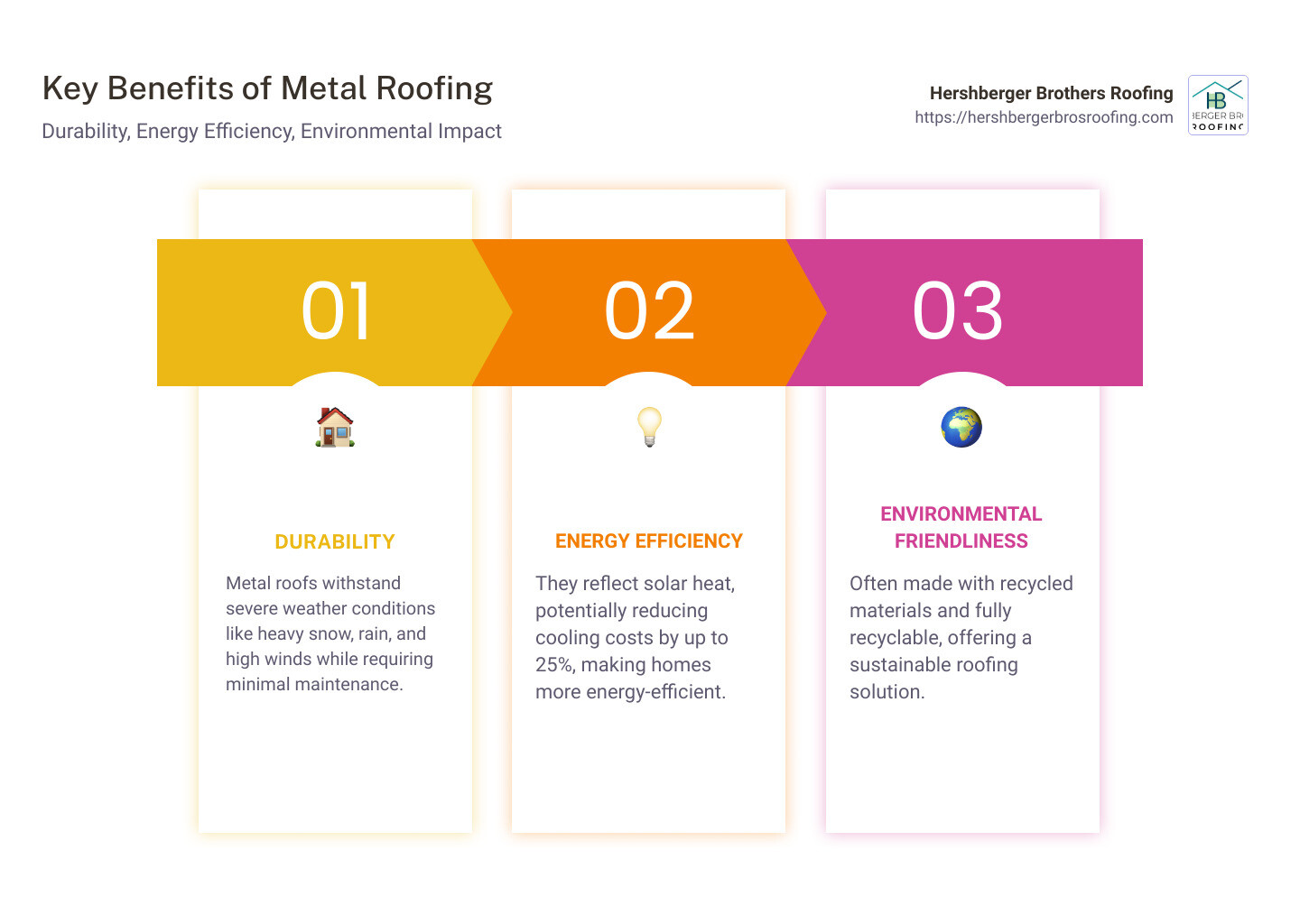
Metal roofs installation offers best durability and energy efficiency, making it a top choice for homeowners looking to withstand harsh weather conditions. One remarkable advantage of metal roofing is its lifespan, lasting anywhere from 40 to 70 years, significantly longer than traditional asphalt shingles. Investing in metal roofing not only improves your home’s aesthetic but also provides a modern, sleek look.
Key Benefits:
– Durability: Withstands severe elements like heavy snow, rain, and high winds with minimal maintenance.
– Energy Efficiency: Reflects solar heat, potentially cutting cooling costs by up to 25%.
– Environmental Friendliness: Often made with recycled materials and fully recyclable, it offers sustainable roofing solution.
My name is Mervin Hershberger, co-owner of Hershberger Brothers Roofing. I have a decade of experience in metal roofs installation, delivering quality and reliability to homeowners.
Choosing the Right Metal Roofing Material
Selecting the right material for your metal roofs installation is crucial. Each metal type offers unique benefits custom to different climates and preferences. Here’s a breakdown of the most popular materials: steel, aluminum, zinc, and copper.
Steel: Strength and Economy
Steel is the most common choice for its strength and affordability. It performs well in areas with heavy snowfall and hail due to its crush resistance. There are two main types of steel roofing:
- Galvanized Steel: Coated with zinc to prevent rust, making it durable and cost-effective.
- Galvalume Steel: A mix of zinc, aluminum, and silicon for improved corrosion resistance.
Steel roofs can last 30 to 50 years, depending on the climate. They are often painted to extend their lifespan and are available in various styles, including standing seam and modular panels.
Aluminum: Lightweight and Corrosion-Resistant
Aluminum is rustproof and excellent for coastal climates where saltwater corrosion is a concern. Though more expensive than steel, its lightweight nature makes it easier to work with. Aluminum roofs can last 30 to 50 years but are prone to denting, so they may not be ideal in hail-prone areas. Painting aluminum with high-performance coatings can improve its longevity.
Zinc: Malleable and Long-Lasting
Zinc is easy to shape, making it ideal for intricate designs like standing seam panels. It naturally resists weathering and won’t rust, developing a dull blue-gray patina over time. When properly installed, zinc roofs can last between 80 to 100 years, offering an excellent long-term investment.
Copper: Aesthetic Appeal and Longevity
Copper is the most expensive option but also the most durable, lasting up to 200 years. Its natural patina adds aesthetic value over time, without needing coatings. Copper suits various climates and is available in modular and standing seam panels, making it a premium choice for those seeking both beauty and longevity.
Climate Considerations
When choosing a metal roofing material, consider your local climate. For example, steel is great for snowy regions, while aluminum excels in salty coastal areas. Zinc and copper are versatile, performing well in most environments but at different price points.

By understanding the properties of each material, you can make an informed decision that aligns with your budget and environmental conditions, ensuring a successful metal roofs installation.
Preparing Your Roof for Installation
Before beginning your metal roofs installation, it’s crucial to prepare your roof properly. This involves several key steps: roof deck preparation, underlayment installation, and a thorough structural inspection.
Roof Deck Preparation
Start by removing any existing roofing materials to get to the bare roof deck. This is essential for a clean installation. Check the deck for any signs of damage, such as rot or loose boards, and replace them as needed. A solid, smooth surface is vital for the stability of your metal roof.
Ensure the deck is free from debris and moisture. A clean surface will help the underlayment adhere properly and improve the overall durability of your roof.
Underlayment Installation
The underlayment is a crucial barrier that protects your roof from moisture and adds an extra layer of insulation. For metal roofs, a high-quality, waterproof underlayment like synthetic felt or a self-healing ice-and-water membrane is recommended.
Installation Tips:
– Roll the underlayment out flat, ensuring there are no wrinkles.
– Overlap each strip by 6 to 8 inches to prevent water seepage.
– Secure the underlayment with roofing nails, ensuring it sits tight against the deck.
Proper underlayment installation is essential to prevent leaks and improve the thermal performance of your roof.
Structural Inspection
Before proceeding with the installation, conduct a structural inspection of your roof. This step is vital to ensure that your roof can support the weight of the metal panels. Look for any sagging or weak spots that might indicate structural issues.
Consult with a professional if you’re unsure about the structural integrity of your roof. They can provide valuable insights and recommend necessary reinforcements to support your new metal roof.
Ventilation Considerations
While preparing your roof, don’t forget about ventilation. Proper ventilation helps regulate attic temperatures and prevents moisture buildup, which can lead to mold and structural damage. Consider installing ridge vents or soffit vents to ensure adequate airflow.
By following these preparation steps, you’ll set a strong foundation for a successful metal roofs installation. Proper preparation not only ensures a smoother installation process but also extends the lifespan and efficiency of your new metal roof.
Metal Roofs Installation Process
Once your roof is prepared, it’s time to move on to the metal roofs installation. This involves several key steps: installing the underlayment, aligning the metal panels, and securing them with the right fasteners.
Underlayment Installation
The underlayment is your roof’s first line of defense against moisture. It’s crucial to install it correctly to ensure protection and insulation.
Steps for Underlayment Installation:
-
Roll it Out: Start at the edge of your roof and roll the underlayment across the deck. Make sure it lies flat to avoid any wrinkles, which can lead to gaps.
-
Overlap Properly: Each strip should overlap the previous one by 6 to 8 inches. This overlap is essential to prevent water from seeping through.
-
Secure the Underlayment: Use roofing nails to fix the underlayment in place. Ensure that it is tight against the roof deck for maximum effectiveness.
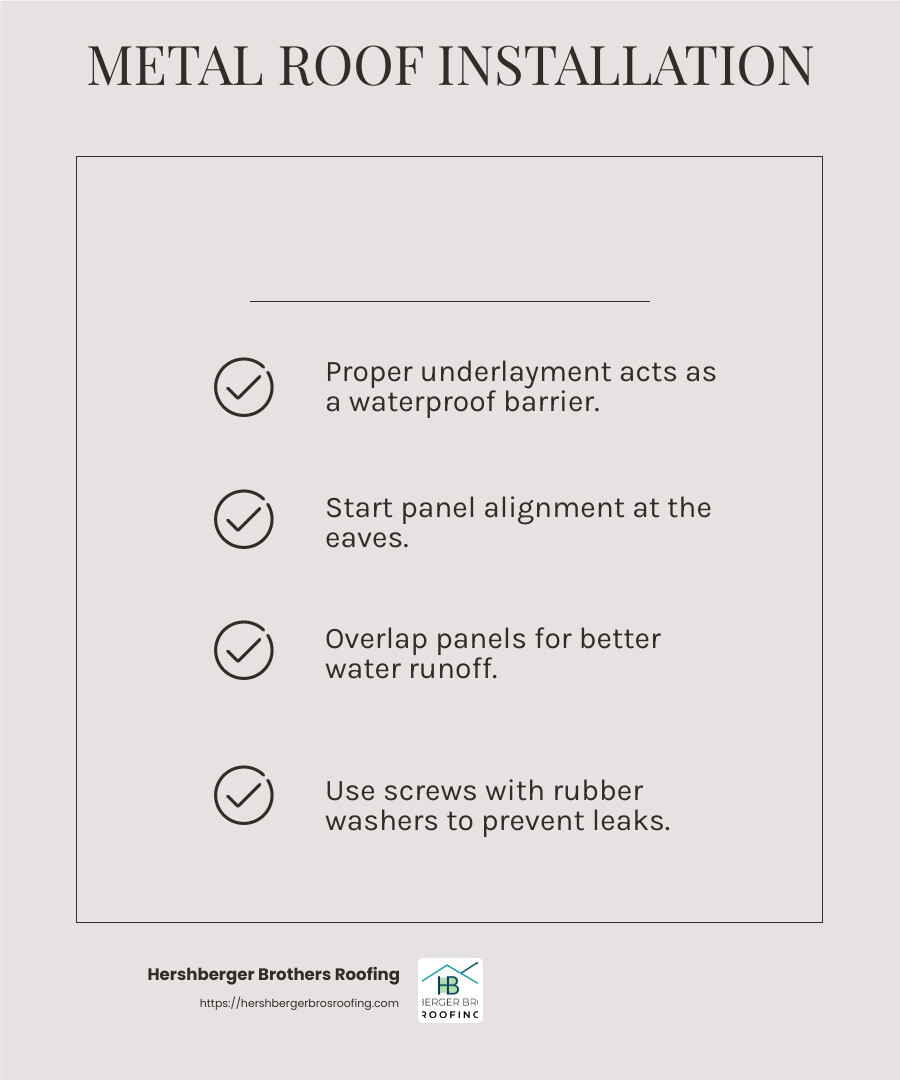
A high-quality underlayment acts as a waterproof barrier, enhancing the durability and thermal performance of your metal roof.
Panel Alignment
Aligning the metal panels correctly is crucial for both aesthetics and functionality. Misaligned panels can lead to leaks and reduce the lifespan of your roof.
Tips for Panel Alignment:
-
Start at the Eaves: Begin installing panels at the eaves and work your way up to the ridge. This helps prevent buckling and ensures a smooth installation.
-
Check for Square: Ensure that the first panel is square to the roofline. This will set the stage for the entire installation and help maintain consistent alignment.
-
Overlap Panels: Make sure the larger edge of each panel overlaps the smaller edge of the next panel. This overlap is critical for water runoff and structural integrity.
Fasteners
Choosing the right fasteners and installing them correctly is key to a secure metal roof.
Fastener Guidelines:
-
Type of Fasteners: Use screws with rubber washers, which provide a tight seal and prevent leaks. Avoid overtightening to prevent damage to the panels.
-
Placement: Follow the manufacturer’s guidelines for screw placement. Some systems require screws in the ribs, while others need them in the flat sections of the panels.
-
Spacing: Ensure consistent spacing between fasteners to distribute the load evenly and prevent panel movement during thermal expansion and contraction.
By carefully following these steps, you’ll ensure a successful metal roofs installation. Proper underlayment, precise panel alignment, and secure fasteners are all critical components that contribute to the durability and performance of your metal roof.
Common Challenges and Solutions
When it comes to metal roofs installation, understanding common challenges and their solutions is key to a successful project. Let’s explore some of these challenges: expansion and contraction, thermal movement, and proper ventilation.
Expansion and Contraction
Metal roofs naturally expand and contract with temperature changes. This movement can cause issues if not properly addressed.
Solution:
-
Floating Clips: Use floating clips instead of fixed fasteners. These clips allow the metal panels to move slightly, accommodating expansion and contraction without causing stress or damage.
-
Expansion Joints: For larger roofs, consider installing expansion joints. These joints absorb the movement and prevent buckling or warping of the panels.
Thermal Movement
Thermal movement refers to the changes in metal panel size due to temperature fluctuations. This can lead to noise or even structural issues if not managed correctly.
Solution:
-
Proper Fastening: Ensure fasteners are not overtightened. This allows panels to move slightly with temperature changes, reducing stress on the roof.
-
Panel Design: Choose panels designed to handle thermal movement. Some designs have built-in features that facilitate movement while maintaining their position.
Proper Ventilation
Ventilation is critical in preventing moisture buildup and maintaining a comfortable indoor environment. Poor ventilation can lead to condensation issues, which can damage the roof structure.
Solution:
-
Ridge Vents: Install ridge vents to allow hot air to escape from the attic. This helps in maintaining a balanced temperature and reduces moisture accumulation.
-
Soffit Vents: Pair ridge vents with soffit vents for optimal airflow. This combination ensures a continuous flow of air, reducing the risk of condensation and prolonging the life of your metal roof.
By addressing these challenges with the right solutions, you can ensure that your metal roof remains durable and effective for many years. Understanding these aspects is crucial for anyone considering metal roofs installation.
Frequently Asked Questions about Metal Roofs Installation
What is the average cost to install a metal roof?
The cost of installing a metal roof can vary widely based on several factors. Location-specific pricing is crucial; for instance, installation costs might differ between Cleveland and Wooster due to local labor rates and material availability. On average, homeowners might expect to pay anywhere from $8,000 to $24,000 for a metal roof, depending on the size and complexity of the roof, as well as the type of metal used.
Cost variations also arise from the choice of material—steel tends to be more affordable, while copper is at the higher end of the scale. It’s important to get quotes from local contractors to understand what to expect in your area.
What are the disadvantages of metal roofs?
While metal roofs offer many benefits, there are a few disadvantages to consider:
-
Expansion Issues: Metal roofs expand and contract with temperature changes. If not installed with proper techniques like floating clips or expansion joints, this can lead to structural stress.
-
Dent Susceptibility: Although metal roofs are durable, they can be prone to dents from severe hail or falling debris. Choosing a thicker gauge metal can help minimize this risk.
Is metal roofing cheaper than shingles?
Initially, metal roofing tends to be more expensive than traditional asphalt shingles. However, when considering long-term savings, metal roofs can be more economical. They often last two to three times longer than shingles, reducing the need for frequent replacements.
In terms of energy efficiency, metal roofs reflect solar heat, which can lower cooling costs by up to 25%. This energy savings over time can offset the higher upfront cost. Additionally, the durability of metal roofs means less maintenance and repair costs compared to shingles, which can suffer from issues like cracking or erosion.
By weighing these factors, homeowners can make informed decisions about whether metal roofing is the right investment for their specific needs and budget.
Conclusion
At Hershberger Brothers Roofing, we pride ourselves on delivering superior craftsmanship and personalized service to every client. Our team is dedicated to ensuring that each metal roof installation meets the highest standards of quality and durability. We understand that your roof is a critical part of your home, providing protection and enhancing its overall appearance.
Located in Northern Ohio, we serve communities like Wooster, Massillon, and Akron with a commitment to excellence. Our skilled professionals have extensive knowledge of metal roofing systems, allowing us to tailor our services to fit your specific needs and local climate conditions.
Choosing us means partnering with a company that values reliability and client satisfaction. We use only premium materials to ensure your metal roof lasts for decades, providing peace of mind and long-term savings. Our personalized approach means we listen to your concerns and preferences, crafting solutions that are as unique as your home.
When you work with Hershberger Brothers Roofing, you’re not just getting a roof—you’re investing in a lasting partnership with a team that cares about your home as much as you do. Contact us today to learn how we can help protect and beautify your property with our expert metal roofing services.